
How Yokeru Improves Telehealth Voice Quality and Operational Oversight ?
Explore how Verbix.AI could support Yokeru's telehealth voice workflows with searchable conversations, quality monitoring, escalation indicators and human-verified insights.

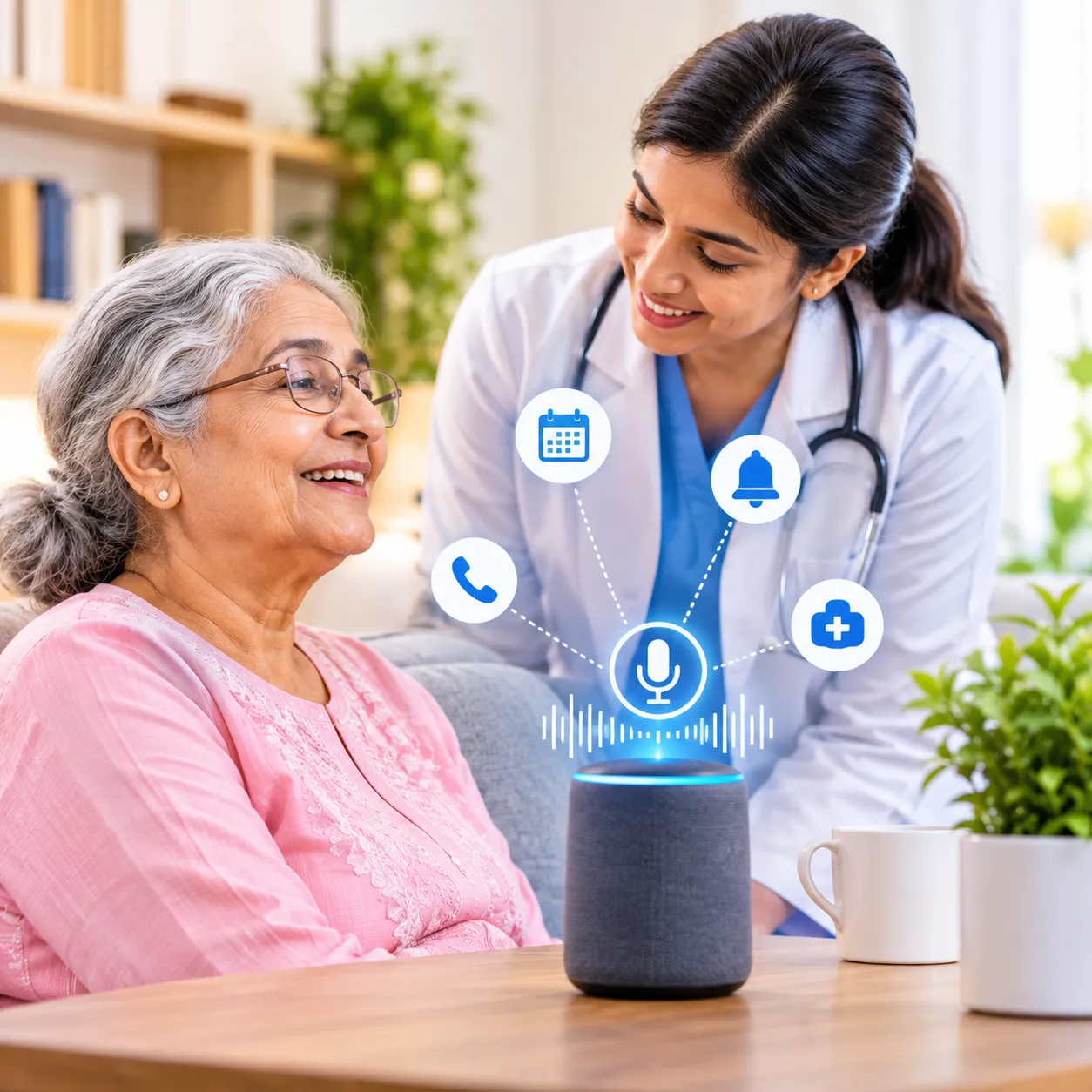
When Every Voice Interaction Needs to Follow the Right Process
In the realms of telehealth and telecare, automated voice interactions could play a variety of roles beyond handing out information. It may even be used to provide routine welfare checks, appointment reminders, inbound enquiries, and communication between persons and care organizations.
Especially on platforms like Yokeru, consistency is key. A routine reminder, a request for assistance and an unexpected response may each require a different operational response.
The challenge is not so much in knowing what was said. It is in being able to determine if the interaction went through the process as intended and if there was any situation that required this to dig deeper.
Verbix.AI can offer an additional level of conversation intelligence, allowing teams to dig into voice interactions, assess workflow quality and highlight actions for humans to evaluate.
The Operational Control Room
Voice Automation is a sequence of tightly coupled activities. Quality assurance check and process consistency check presents a possibility at each step.
Interaction monitoring
Comprehend the goal of a call and differentiate between an ordinary conversation and a conversation dealing with requests or concerns.
Workflow verification
Review whether of the conversation followed the configured script, process requirements and intended call outcome.
Exception identification
Surface configured keywords, topics or indicators that may warrant further review by an authorised team member.
Review and accountability
Accurate, operational-review-friendly and well-documented make it easier to return to key comparisons and conversations.
These actions need to fit within Yokeru's ongoing platform controls and routine care approaches.
The Challenge: Automation Needs Meaningful Oversight
Automated conversations can run at a scale where all the interactions would be impossible to review manually.
However, evaluating just a small portion may not give teams a view into repetitive workflow issues.
Potential areas to investigate include:
Whether automated interactions adhere to approved conversation flows.
Whether call outcomes are documented correctly and accurately.
Whether assistance requests are routed using the correct procedures.
Whether non-standard or incomplete interactions are easy to find.
Whether managers have enough info for quality assessment and process improvements.
In telehealth and telecare applications, these questions are particularly relevant because communication quality and escalation procedures may have an impact on the experience and safety of the users of the service.
Introducing a Conversation Assurance Layer
Verbix.AI has the potential to help build a structured approach to evaluating supported voice interactions.
In rather than treating each recording as a single file, teams might use analytics to categorise conversations, identify pertinent patterns and check on interactions against agreed quality metrics.
1. Conversation records that are easier to inspect
Transcription for supported calls and languages makes interactions searchable and reduces the effort involved in fact finding relevant portions of a recording.
2. Workflow checks based on approved procedures
Quality scorecards configured to gauge whether specific conversation steps had been completed. Workflows for Yokeru should be the foundation upon which these quality checks are built, instead of generic assumptions about healthcare calls.
3. Topic-based interaction classification
Topic tags can help to separate call types in cases of welfare check reminders inbound requests and follow up interactions.
4. Indicators for conversations requiring review
Configured escalation signals could be use in order to bring potentially important interactions to the attention of authorises that decide if the escalation is warranted. These indicators have to be verified with procedures and cannot be used to establish clinical urgency freely or replace the existing escalation controls.
5. Clearer records for operational follow-up
Call summaries can assist reviewers in grasping the main discussion topics and the documented teaching outcomes, provided that the transcript - which is generated automatically - is accurate enough to serve as a basis for post-hour review and confirmation by a human.
From Voice Data to Operational Decisions
The Yokeru workflow proposal may be portrayed as an assurance cycle rather than a typical analytics dashboard.
| Operational stage | Role of conversation analytics |
|---|---|
| 01Interaction captured | Process supported voice recordings under approved policies. |
| 02Conversation reviewed | Generate transcripts and identify relevant topics. |
| 03Quality assessed | Evaluate configured workflow and communication criteria. |
| 04Exceptions highlighted | Flag indicators for authorised human review. |
| 05Improvements introduced | Refine scripts, procedures and quality checks where evidence supports a change. |
The analytics in place helps to identify what needs reviewing. The person responsible or the operational system has the grace to make the decisions and take the actions.
What a Human-Verified Quality Framework Could Look Like
For a telemed speak to now voice platform, the quality assessment should focus on the objective of each interaction.
| Review dimension | Example assessment |
|---|---|
| Script consistency | Were the required steps followed? |
| Interaction outcome | Was the intended call outcome documented? |
| Communication clarity | Was the information communicated clearly? |
| Process completion | Were required workflow steps completed? |
| Escalation handling | Were configured indicators handled according to the approved procedure? |
The scorecards should be tested with representative recordings and qualified personnel should review them before operational decisions are made.
Transcripts, automated score or sentiment indicator—wherever they come from—must not be assumed as conclusive proof that a person is safe, unsafe, good, or needs clinical intervention.
Measuring Whether the Approach Makes a Difference
A pilot may assist Yokeru in determining whether more conversation visibility will enhance consistency and efficiency in the quality-review process.
Possible measures to evaluate the model:
Workflow adherence
Percent of reviewed interactions meeting the process criteria agreed upon.
Escalation handling time
Time between a verified escalation event and the recorded response by a human.
Routing accuracy
Frequency of straggling requests reaching the correct destination.
Quality-review coverage
Number or percent of interactions under consideration.
Alert reliability
Measuring the false-positive and missed-alert rates against an independently validated reference set.
Results must be compared between equivalently-timed calls and periods. All published figures should show their baseline value along with initial end value, duration, sample size, computational methodology, and source data.
Any performance gains must be verified through evidence before being credited to Verbix.AI.
Built Around the Requirements of Telehealth
Voice analytics in healthcare environments — not just a technical necessity, but requires governance to be in place.
Any distribution proposed must be able to factor in:
Applicable UK data protection requirements, including UK GDPR and the Data Protection Act 2018.
Appropriate recording notices, lawful basis, and consent where required.
Transcript Role-based access to recordings, transcripts and reports.
A definition of data retention and deletion policies.
Human review of safety-related indicators and exceptions.
TRANSCRIPTION accuracy testing of relevant accents, languages, and call conditions.
Escalation procedures documented and ownership of the follow-up clarified.
Verbix.AI is to provide a quality and insight as an augmenting layer - not to substitute Yokeru's clinical, safeguarding or operational responsibilities.
The Bigger Opportunity: More Consistent Voice Operations
As the application of voice automation expands throughout telehealth and telecare, organizations need an understanding of not just the number of interactions, but the reliability of those interactions.
A structured approach to reviewing conversations could allow Yokeru to identify recurring patterns in workflow, identify some of their non-essential processes that could be turned into learning opportunities and enhance the consistency of quality control.
Verbix.AI may assist in converting conversations into more actionable operational intelligence if search functionality existed within walks in the correspondent claims work reviews.
Make every conversation easier to review, understand and improve with Verbix.AI.
Book a DemoCustomer Testimonial
“We can replace difficult voice quality problems, find repeat issues patients face by analyzing conversations in telehealth and use that to improve communication across all of our teams, We get more visibility into interactions, which in turn helps enable quality assurance, smooth operations, and delivering more consistent patient experience.”

Monty Alexander – CEO, Yokeru
Frequently Asked Questions
Analyzing AI call interactions can help telehealth teams review voice interactions, identify recurring communication issues and assess whether conversations are following opened workflows. It facilitates quality assurance by making conversations easier to search, analyse and review.
Verbix.AI might augment conversation intelligence to include supervised call transcription, place content in a topic classes, quality checks start with your configuration, escalation signals and call summary. The haired can accomplish it with legal teams evaluating exchanges and finding issues to address.
AI call analytics could enable the categorisation of voice interactions to read as supported and consist of welfare checks, appointment reminders, inbound enquiries, follow-up calls. Tagging topics and searchable transcripts could enable teams working with teams to quickly see different types of interactions.
Configured keywords, themes and escalation triggers could flag which conversations may need additional back-end review. That said, these signals must be cross-checked against approved procedures and a privileged person should screen them. AI analytics should not determine clinical urgency nor should they replace the existing escalation procedures.
Configurable quality scorecards that will determine whether we are completing this conversation as required, recording the impact, speaking clearly and following the correct workflow. Scorecards must be tested versus representative recordings and reviewed by qualified personnel.
Workflow adherence, surge handling time, routing accuracy, quality-review coverage and alert reliability could be monitored by organizations. Results have to be compared to a baseline. Sample size, date range, calculation method should be documented.
No. Call analytics made by AI shouldn't be used to let clinical, safeguarding or operational responsibilities go unchecked. Human reviewers should handle safety-related indicators, exceptions and decisions in line with approved procedures.