
How StrideSolutions Used Verbix.AI to Strengthen Telecom Agent Performance
See how StrideSolutions used Verbix.AI call analytics to gain insight into agent conversations, identify coaching opportunities, and support better customer experiences.
Adopting a More Structured Approach to Call Quality & Performance
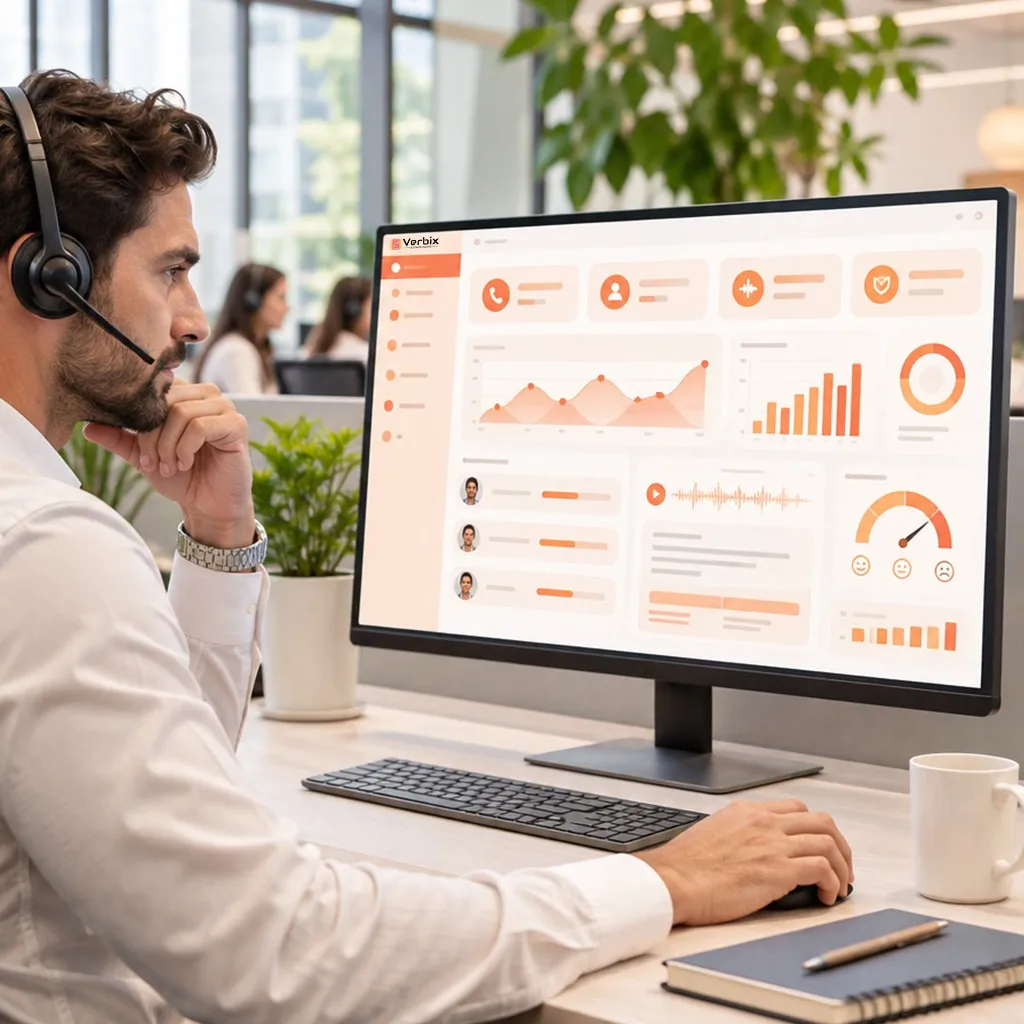
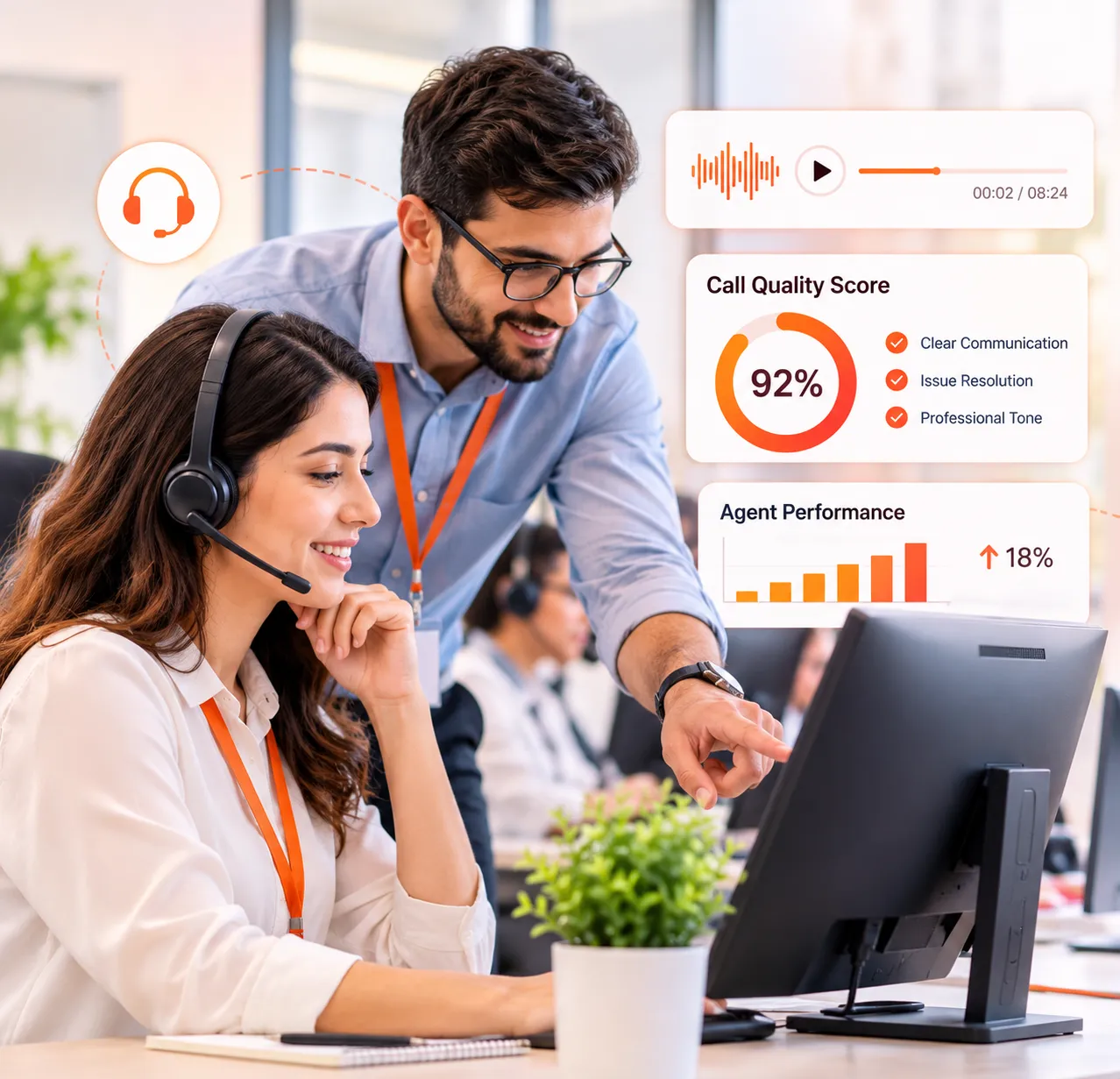
StrideSolutions leveraged Verbix.AI to analyze customer conversations, helping them adopt a more structured approach to call quality and agent performance. In the telecommunications industry, each support interaction provides valuable insight into how effectively agents diagnose issues, convey technical information, and lead customers toward resolution.
This case study examines how call analytics with AI capabilities can help: making conversations easier to review, helping teams find potential coaching opportunities, and level up call quality with a standard framework to consistently measure calls.
Understanding What Happens on Customer Calls
Telecom helpdesk teams work around problems from service questions on VoIP and broadband connectivity, billing problems, and service complaints. Being able to address the pressing matter is key, but how you do it also matters.
Did the agent do the diagnostic questions on all the right places, the needed explanation was one-to-one with the problem? I said the common set of troubleshooting is correct? That the Customer is aware about what is happening next?
Consistently answering these queries can be especially hard - when supervisors have limited time to listen to recorded calls. Overlooking other issues because you only reviewing a small sample, it may denies you the opportunity of getting the bigger picture on recurring issues or on variation among agents performance.
An opportunity to examine customer conversations in a more systematic manner and, using the insights gained, improve call-quality reviews and coaching with the use of Verbix.AI by StrideSolutions.
Time-consuming manual call reviews
Supervisors have limited time to listen to recorded calls, reviewing only a tiny fraction of total customer interactions.
Inconsistent diagnostic questioning
Difficult to verify whether agents consistently asked the right diagnostic questions and adhered to correct troubleshooting procedures.
Unclear customer explanations
Ensuring technical VoIP and broadband explanations are one-to-one with the problem and that customers understand what happens next.
Overlooked recurring issues
Reviewing calls in isolation denies supervisors the bigger picture on recurring broadband outages and shared technical complaints.
Hidden variation in agent performance
Wide discrepancies in support delivery, empathy, and troubleshooting effectiveness across workers remain undetected.
Reactive quality assurance
Teams identify customer dissatisfaction too late—often only when complaints rise, repeat calls multiply, or customers switch providers.
How Verbix.AI Supported Call Analysis
Verbix.AI has a suite of AI driven products that teams can have support call recordings turn into easier to review and act on information. For example, in a deployment of StrideSolutions you can get:
Call transcription
Making conversations searchable so that managers could see what they were saying.
Quality scoring
Call evaluation against the communication, troubleshooting, issue handling, or escalation standards that you choose to configure.
Keyword and topic analysis
Surfacing recurring subjects such as connectivity issues, billing questions, or technical support requests.
Sentiment insights
Flaging conversations that could potentially need to be reviewed more closely.
Call summaries
Providing a summary of important points for supervisors so they don't have to account each review from the start.
This allows supervisors to focus on particular interactions and trends. Analysed automatically to inform what a human would identify as anomalies – it is an aid to human judgment, not a replacement. Findings must be subject to the context of each call and align with the values and service standards of the organization.
From Call Insights to Focused Coaching
When it comes to analyzing call data, the reason the value of the call analytics comes from what a team does with the information. For a telecom support operation, various insights can be extracted to patch the common areas of improvement.
More Consistent Troubleshooting
A call review could highlight that an agent failed to ask a diagnostic question or to give a clear next step. Supervisors can use this opportunity to leverage a real example to provide coaching on a more standardized troubleshooting process.
Clearer Technical Communication
Even if someone has technical knowledge, they might not be able to explain it well enough for customers. Conversation wording reviews point managers to instances where an agent could rephrase something using simpler language, confirm that the customer understands, or clarify next steps.
Better Visibility into Recurring Issues
Many topics tend to appear across calls that may show managers whether an issue is a training need, a process gap, or potentially a bigger service issue. Keyword and topic analysis surfaces patterns that may be missed in a review of calls in isolation.
More Targeted Review of Difficult Interactions
Sentiment signals or other configured indicators help level set calls and determine when a supervisor needs to be involved. Rather than absolute assessments of customer satisfaction, these signals serve as effective prompts for human review.
This clarity of coaching is intended to give specifics: what actually occurred in the first place, what could have been done better, and validate that the newly introduced behavior continues to show up in follow-on interactions.
Measuring Agent Performance and Customer Impact
That way, you get a more systematic approach to quality assurance, gives the team a way to measure whether coaching is working. What you measure is most relevant to your programme Goals which have been defined by Stride Solutions.
| KPI | What it helps assess | Category |
|---|---|---|
| Quality-assurance score | How consistently calls meet defined service standards | Quality |
| First-contact resolution | Whether customer issues are resolved during the first interaction | Resolution |
| Repeat-contact rate | Whether customers need to contact support again about the same issue | Efficiency |
| Communication quality | How clearly agents explain technical information and next steps | Clarity |
| Manual review time | How much supervisor time is spent evaluating recorded calls | Operations |
| Customer satisfaction | Customer feedback on the support experience | Experience |
| Coaching follow-through | Whether targeted behaviours improve in subsequent call reviews | Development |
Note on Performance Metric Claims: Did StrideSolutions achieve a 20% improvement in agent performance? No verified 20% improvement figure has come from this case study. A jump from a quality score of 70/100 to 84/100 is just an illustration of 20% relative increase, not an actual result of StrideSolutions.
Customer Perspective
“Improved visibility of customer conversations supports us when it comes to conducting a more structured call quality review. We can identify opportunities for coaching and create a more cohesive support journey for the customers by reviewing the way the agents communicate, provide solutions, and walk them through issues. ”

— James Beck, StrideSolutions
Real-World Application of Call Analytics
StrideSolutions' putting Verbix.AI to work is one example of the real-world application of call analytics: the tool allows teams to review and examine what they have been doing good in their conversations with customers, and what could be improved, and use that data to feed into quality reviews and agent coaching.
For telecom support teams, the aim is not merely to analyse more calls. We aim to derive insights from them — For example to identify common issues, identify specific behaviours for coaching, and measure if changes result in better interactions with customers.
The impact has to be validated with concrete operational data. Having defined quality standards, periodic quality reviews, and lineage based coaching focused on call analytics will help this decision support platform to be used efficiently as a continuous-improvement process.
Frequently Asked Questions
Answers to help telecommunications providers evaluate AI call analytics and agent coaching workflows.
Verbix.AI is an AI-driven call analytics platform that can enable organizations to analyse conversations with their customers through transcription, configurable call scoring, keyword analysis, sentiment insights, and call summaries. Features available are limited to the deployment and configuration.
Call analytics for AI call analytics help teams to look at more consistent conversations, find calls to identify recurring support topics domains, and suss out which calls may need a more thorough review. These findings facilitate improved quality assurance and easier agent coaching.
When new features ready, one can use transcripts along with quality scores and conversation insights setup for managers to talk to agents in detail around specific examples. Human supervisors should confirm the analyses and create relevant advisory content.
Keyword and topic analysis can surface repeat references such as connectivity, billing, or troubleshooting. Teams can look into whether those patterns are indicative of a training need, process gap, or underlying service issue.
No verified 20% improvement figure has come from this case study. This jump from a quality score of 70/100 to 84/100 is just an illustration of 20% relative increase, not an actual result of StrideSolutions.
No. In fact, AI-generated scores and signals are designed to augment human review, not eradicate it. In lieu of hiring a random employee for every job, supervisors should evaluate the entirety of the conversation, use the same criteria upon repeated listings, verify facts before providing feedback or continuing to use performance-based decisions.